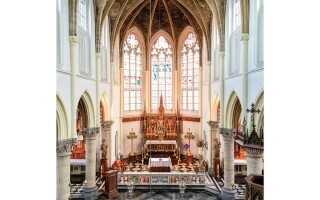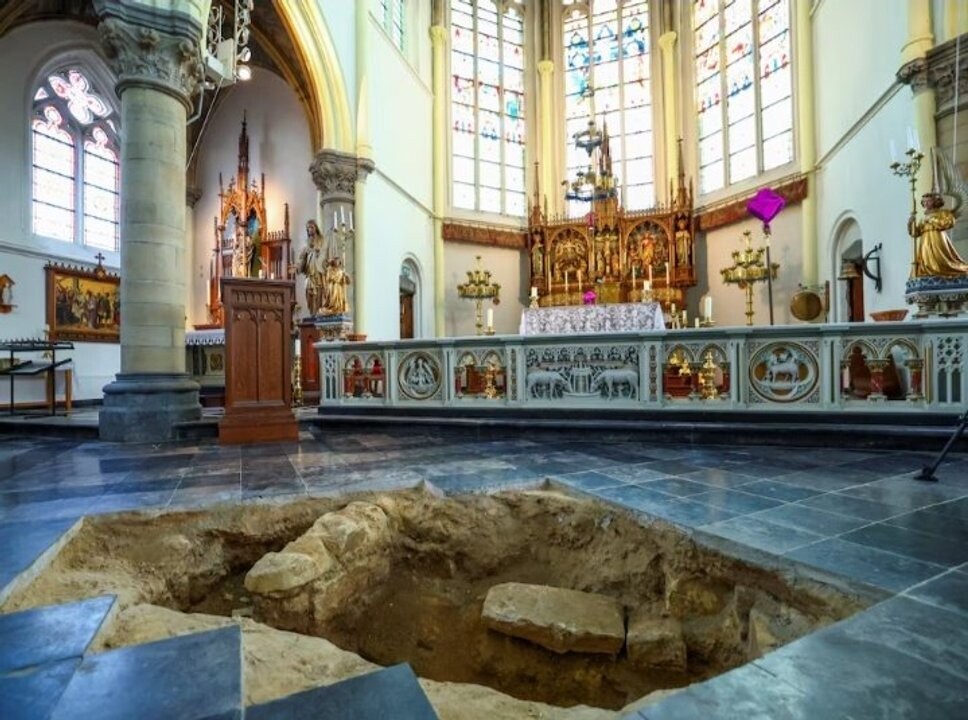
Archaeologists and workers have found a skeleton in a church in the Dutch city of Maastricht, which they believe could correspond to the famous French musketeer Charles de Batz de Castelmore d'Artagnan, whose tomb has been a mystery for over three centuries. The remains were discovered in the Church of St. Peter and St. Paul after the partial collapse of the temple floor last February, local sources and investigation officials told the Dutch RTL channel on Wednesday. During repair works, workers found the skeleton in the area where the altar used to be, a place historically reserved for figures of relevance. According to experts, the evidence points to it possibly being the French military officer, who served as King Louis XIV's trusted man and leader of the musketeers, an elite corps in charge of the monarch's personal protection. D'Artagnan died in 1673 during the siege of Maastricht, in a French army offensive to take the city, and it is believed the musketeer was a victim of a musket ball to the throat or chest. On the skeleton, remains compatible with this type of projectile have been found in the thoracic area, which reinforces the researchers' hypothesis. Additionally, a French coin was found next to the remains, an element that experts say could indicate the status of the buried person, while the tomb's location, under the old altar, suggests it is a high-ranking individual. The theory of burial in Maastricht The theory that d'Artagnan was buried in this church is not new, although no excavations had been carried out until now to confirm it. It is believed that due to the combat conditions and high temperatures, his body was not transported to France and was buried in Maastricht. To verify the identity, DNA samples, mainly from dental pieces, were taken and have already been sent to a laboratory in Munich (Germany), where they will be compared with the genetic material of a descendant of the De Batz family, whose paternal line still exists in southern France, near Avignon. The results of the analysis, which could clarify one of the best-known historical enigmas of modern Europe, are expected in the coming weeks. Meanwhile, archaeologists are maintaining a cautious stance but acknowledge that so far, there are no elements that contradict the possibility that the remains belong to the historic musketeer.